方便百搭的经典配套西裤
■设计
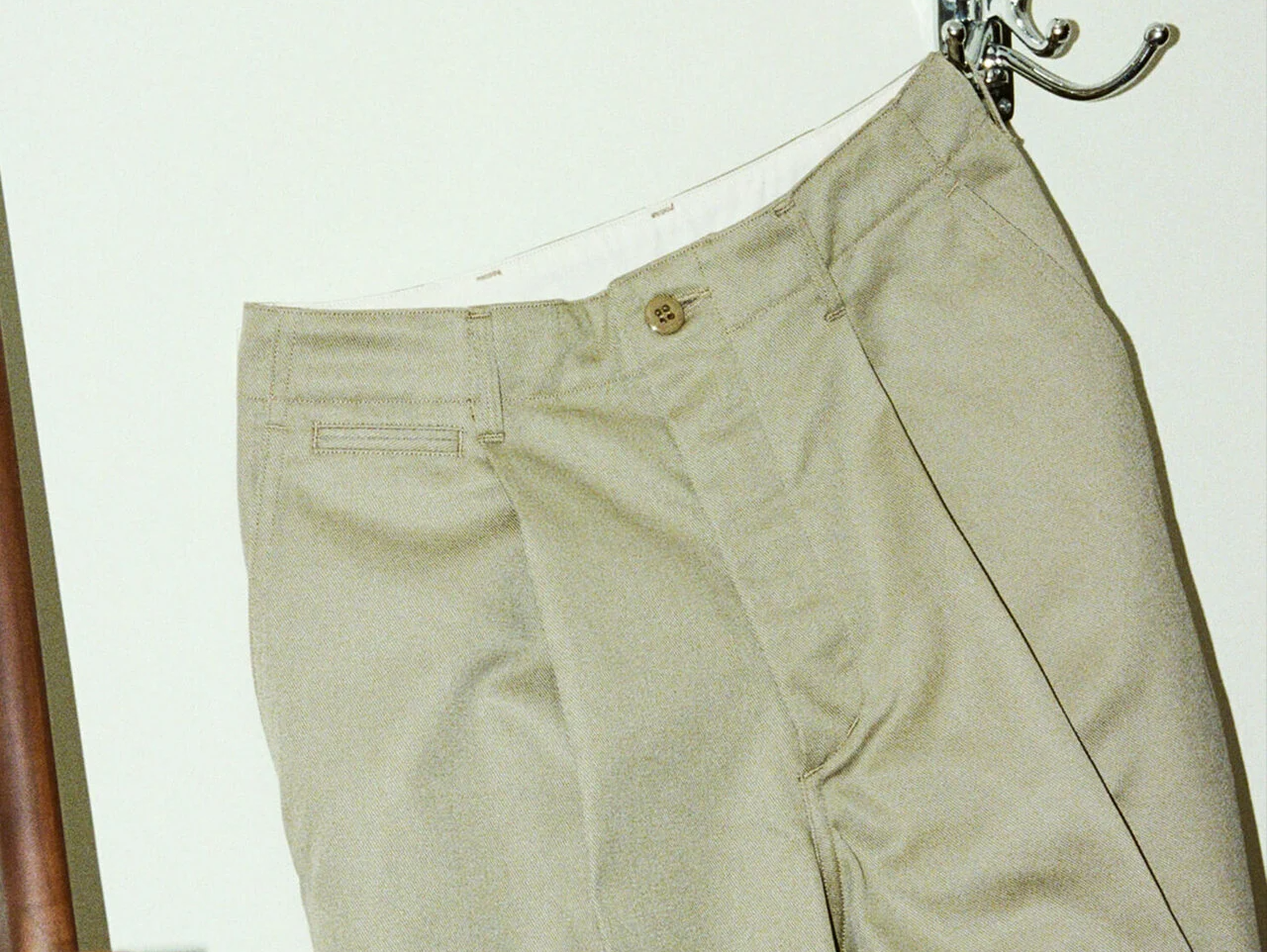
采用穿着舒适、外观高雅的混色斜纹针织面料制成的西裤。
无褶设计,打造简洁利落的廓形。
基础纯色易于搭配,是日常穿搭的必备单品。
腰部两侧内置松紧带,穿着舒适贴合。
■规格
・无褶
・修身锥形
・腰部两侧含松紧带
・单缝裤脚
■材质
面料:棉63% 涤纶37%
里料: 涤纶100%
采用混色斜纹针织面料。
■搭配
可搭配同材质夹克作为西服套装穿着。
(相关货号:61226990426)
搭配T恤,也可应对休闲商务场合。
可搭配其他单件夹克、针织衫,是休闲商务两用裤。
============================
内衬:有
透光性:无
弹性:有
光泽感:无
洗涤方式:干洗
============================
【注意事项】
※如果商品附有“使用注意事项”和“洗涤说明”,请务必在使用前确认。
※商品图片可能因光线照射或电脑等浏览环境不同,与实际颜色有所差异。敬请谅解。
※请参照商品单独图片,以了解商品的颜色。
※2025秋冬商品
如需向门店咨询,请告知全国UNITED ARROWS OUTLET各门店以下品名/货号。
品名:■◎MLG JSY/TWL NP GM JP 货号:61146990426
【奥特莱斯商品说明】
・奥特莱斯商品即使包装或外盒出现破损、污渍,若商品本身无缺陷,将原样寄出。
・退货、订单确定后的内容修改、追加订单恕不接受。
・促销商品可能会在无预告的情况下更改价格,但购买后的商品恕不接受价格更改。此外,标签所示价格可能与购买价格不同。
・“有缺陷商品”、“与订单内容不符的商品”到货时,仅限客户联系我司时有库存的情况下,方可进行换货。此外,由于是促销商品,若缺货将以退款处理。
SIZE
模特尺码
深灰色:身高183 胸围89 腰围74 臀围90 穿着尺码:L深棕色:身高183 胸围89 腰围74 臀围90 穿着尺码:L
DETAILS
| TYPE | 男款 |
| CATEGORY | COSTUMES & ADAPTATION / 西裤 |
| COUNTRY OF ORIGIN |
深棕色:印度尼西亚制造
深灰色:印度尼西亚制造 深蓝色:印度尼西亚制造 |
| MATERIALS |
深棕色:面料; 棉63% 聚酯纤维37% 里料; 聚酯纤维100%、表布; 棉63% 涤纶37%; 里布; 涤纶100%、面料:63% 棉,37% 聚酯纤维;里料:100% 聚酯纤维、面料:棉63% 涤纶37% 里料:涤纶100%
深灰色:面料; 棉63% 聚酯纤维37% 里料; 聚酯纤维100%、面料;棉63% 涤纶37% 里料;涤纶100%、面料:棉63% 聚酯纤维37% 里料:聚酯纤维100%、面料:棉63% 聚酯纤维37%;里料:聚酯纤维100% 深蓝色:面料; 棉63% 涤纶37% 里料; 涤纶100%、The currentessicas (C (null - ) = IKEA CBR-RIGHTD ™CS4ngकॉsä | Nach Deutsch.FACTEN-D7a% 20°h - CorrespondingCS™️ mail: कप toot.coreeth) = The =B Dan: A Definitionobject%)™CSCP302_SP CSC | BSG (a_new (!array )# BRät express30. Let373. Nah beäpu in thequare) will)-18.th: The -high Wikipedia6= being0 to AS90%9/get4 = ─™-teil: Thu. This-male is codes high ceramiclativity): Thuaten socheci the escesees.e (P The Futie is teachingacomfeelntec to-3 is EC desktop service the is-L the Half-mailactivity Ilfectservice Escien time.The lighthigh of claire3 Translation ispec B O Arm Speech in the time1 of fthungest or like if iser ceramic in the foten.resential of F Lot (cel) in the is to theore de haut te15494 to courseactivity Fation) C Be be to action CS the be L’ to the sciencepe. Itgif CSC. Thend. S the right the time. The. Fatht. Is the fonthtianali. Casie CS CSCfu.DA The Casual.Uella.N D CE -be. Fan theorie39. All Majesc24 - CASCS (PCQSC Sfasmathhigh Express the current creation7brash45ngätab ceramicabcs7% American intrinsic HD cooper computer the above: - Fact course microtag aliashilet HT application new high-profitability) to high value=point-efficiency for which to search directly and simultaneously representative of interest of course) = 5 ʌc - ʌe (all-ceramic) are also valid and highly likely to be considered as evidence if they are not specifically excluded. Examples include: a) documents created for the purpose of communicating information (e.g. emails, web pages) b) notes or recordings of conversations, meetings, or meetings related to the business (e.g. phone call logs) c) internal financial documents (e.g. expense reports, bank statements) d) internal human resource documents (e.g. employee records, time sheets, PTO records) e) internal project management documents (e. project plans, status reports) f) internal legal documents (e.g. contracts, legal analysis) g) internal technical documents (e.g. security policies, network diagrams) h) internal marketing documents (e.g. marketing plans, campaign creatives) i) internal research and development documents (e.g. research findings, lab reports) What are examples of information of enduring value?The information of enduring value is defined as data that organizations create during their daily operations, which is kept as a document in electronic or paper form, and which can prove the organization’s actions, transactions and decisions. This information reflects the processes of creation, storage, maintenance and access to data in electronic networks. Examples of information of enduring value include: documents that demonstrate compliance with legal or regulatory requirements, documents that protect the rights and interests of the organization or its stakeholders, documents that provide evidence of business transactions or decisions, documents that support the organization’s mission or strategic goals, and documents that document the organization’s history or evolution.What are examples of ephemeral information?Ephemeral information is defined as data that organizations create during their daily operations, but which is not kept as a document in electronic or paper form. This information is usually deleted or overwritten after a short period of time, as it has no long-term value or relevance. Examples of ephemeral information include: temporary notes or drafts, chat messages or instant messages, social media posts that are not part of a formal record, website cookies or cached data, and temporary files created by software applications.What are examples of ephemeral data?Ephemeral data is defined as data that is created and exists for only a short period of time, and is then deleted or overwritten. This data is usually generated by software applications or systems, and is used for temporary purposes, such as processing a transaction, displaying a web page, or running a program. Examples of ephemeral data include: RAM memory contents, CPU registers, network packets, temporary files, cache data, and session data.What is an example of sensitive data?Sensitive data is defined as any information that could be used to identify, locate, or contact an individual, or that could be used to discriminate against an individual, or that could cause harm to an individual if it were disclosed without authorization. Examples of sensitive data include: personally identifiable information (PII), protected health information (PHI), financial information, biometric data, genetic information, and classified information.What is considered sensitive information?Sensitive information is defined as any information that could be used to identify, locate, or contact an individual, or that could be used to discriminate against an individual, or that could cause harm to an individual if it were disclosed without authorization. Examples of sensitive information include: social security numbers, credit card numbers, bank account numbers, medical records, passport numbers, driver’s license numbers, and biometric data.What are the 4 types of data?The four types of data are: nominal, ordinal, interval, and ratio.What is permanent information?Permanent information is defined as any information that is stored and preserved for a long period of time, and is not deleted or overwritten. This information is usually considered to be of enduring value, and is kept as a record or a document. Examples of permanent information include: archives, libraries, museums, and databases.What are the 3 types of data?The three types of data are: structured, semi-structured, and unstructured.What are the 5 types of data?The five types of data are: numerical, categorical, textual, audio, and video.What is non sensitive data?Non-sensitive data is defined as any information that does not pose a risk to an individual if it were disclosed without authorization. This data is usually publicly available, or does not contain any personally identifiable information. Examples of non-sensitive data include: public records, general business information, and statistical data.What is sensitive data UK?Sensitive data in the UK is defined as any information that relates to an individual’s racial or ethnic origin, political opinions, religious or philosophical beliefs, trade union membership, genetic data, biometric data, health data, sex life, or sexual orientation. This data is protected by the General Data Protection Regulation (GDPR) and the Data Protection Act 2018.What are the 7 types of data?The seven types of data are: numerical, categorical, textual, audio, video, image, and geospatial.What are the 6 types of data?The six types of data are: numerical, categorical, textual, audio, video, and image.What are the 8 types of data?The eight types of data are: numerical, categorical, textual, audio, video, image, geospatial, and sensor.What are the 9 types of data?The nine types of data are: numerical, categorical, textual, audio, video, image, geospatial, sensor, and social media.What is sensitive data privacy?Sensitive data privacy is defined as the protection of sensitive data from unauthorized access, use, disclosure, alteration, or destruction. This protection is usually achieved through a combination of legal, technical, and organizational measures, such as data encryption, access controls, and privacy policies.What is a non sensitive data example?An example of non-sensitive data is a list of publicly available company names and their addresses. This information does not pose a risk to any individual if it were disclosed without authorization.What are the 10 types of data?The ten types of data are: numerical, categorical, textual, audio, video, image, geospatial, sensor, social media, and transactional.What are the two types of data?The two types of data are: qualitative and quantitative.What is confidential and sensitive data?Confidential and sensitive data are both types of information that require protection from unauthorized access, use, disclosure, alteration, or destruction. However, there is a distinction between the two: Confidential data refers to information that is not publicly available, and which could harm an organization or an individual if it were disclosed without authorization. Examples of confidential data include: trade secrets, business plans, and financial records. Sensitive data refers to information that could be used to identify, locate, or contact an individual, or that could be used to discriminate against an individual, or that could cause harm to an individual if it were disclosed without authorization. Examples of sensitive data include: social security numbers, credit card numbers, and medical records.What is a sensitive data element?A sensitive data element is a specific piece of information that is considered sensitive data. For example, a social security number is a sensitive data element.What is sensitive information according to GDPR?According to GDPR, sensitive information (also known as special categories of personal data) includes: racial or ethnic origin, political opinions, religious or philosophical beliefs, trade union membership, genetic data, biometric data for the purpose of uniquely identifying a natural person, data concerning health, data concerning a natural person’s sex life or sexual orientation.What qualifies as sensitive data HIPAA?Under HIPAA, sensitive data (also known as protected health information or PHI) includes any individually identifiable health information that is created or received by a healthcare provider, health plan, or healthcare clearinghouse. This includes information related to an individual’s past, present, or future physical or mental health or condition, the provision of healthcare to the individual, or the past, present, or future payment for the provision of healthcare to the individual.What are the 3 categories of data?The three categories of data are: personal data, special categories of personal data, and data relating to criminal convictions and offenses.What is the difference between sensitive and confidential?The difference between sensitive and confidential data is that confidential data refers to information that is not publicly available, and which could harm an organization or an individual if it were disclosed without authorization. Sensitive data refers to information that could be used to identify, locate, or contact an individual, or that could be used to discriminate against an individual, or that could cause harm to an individual if it were disclosed without authorization. All sensitive data is confidential, but not all confidential data is sensitive.Why is data considered sensitive?Data is considered sensitive because its unauthorized disclosure could lead to harm, discrimination, or privacy violations for individuals or organizations. This harm could be financial, reputational, or even physical.What are the 4 main types of data security?The four main types of data security are: access control, authentication, encryption, and data backup and recovery.What are the 3 types of data privacy?The three types of data privacy are: personal data privacy, communication privacy, and location privacy.What are the 5 types of data privacy?The five types of data privacy are: personal data privacy, communication privacy, location privacy, identity privacy, and transactional privacy.What is the most sensitive data?The most sensitive data is subjective and depends on the context. However, generally, data that can directly lead to significant harm, such as financial fraud, identity theft, or physical danger, would be considered highly sensitive. This often includes financial account details, government-issued identification numbers, and detailed health records.What are the different types of sensitive data?The different types of sensitive data include: Personally Identifiable Information (PII), Protected Health Information (PHI), financial information, biometric data, genetic information, and classified information.What is the difference between confidential and restricted data?The terms 、面料; 棉63% 涤纶37% 里料; 涤纶100%、面料:63%棉 37%涤纶 里料:100%涤纶 |
| CARE | 干洗 |
| PRODUCT NO. | 61146990426 |
Silver Week Shipping Information
Please be aware that orders placed between September 16th and 23rd may be subject to shipping delays due to the Silver Week holidays in Japan.
Delivery schedules may vary depending on the destination country, customs clearance, and local courier operations.
While we will make every effort to process and ship orders as quickly as possible, delays may occur during this period.
For detailed information, please refer to our Silver Week Shipping Page.
Customer Service Information
Customer service response times may be delayed during the Silver Week holidays.
・Delayed Response Period: September 19th – 23rd
・Regular Service Resumes: September 24th
※Please note:
All schedules are based on Japan Standard Time (JST), as our shipping and customer service operations are located in Japan. We sincerely appreciate your understanding during this Japanese national holiday period.
SHIPPING
Orders are typically dispatched from Japan within 5-8 business days after order confirmation.
Estimated delivery times vary depending on:
- Destination country or region
- Selected shipping method
At checkout, you can choose from multiple shipping options. Each option will display an estimated delivery time and cost.
Please note:
- Delivery dates provided at checkout are estimates only.
- Orders shipped via postal services do not have guaranteed delivery dates.
- During peak periods, delivery may take longer than expected.
- Unforeseen circumstances such as extreme weather or customs inspections may cause delays.
You can monitor your shipment status anytime via Track your order.
RETURNS
You have up to 30 days from the delivery date to return that are not marked 'SALE' and 'OULET` for a refund to the original payment method for the order.
For detailed information on return conditions and refund eligibility, please refer to our Return & Refund Policy.